
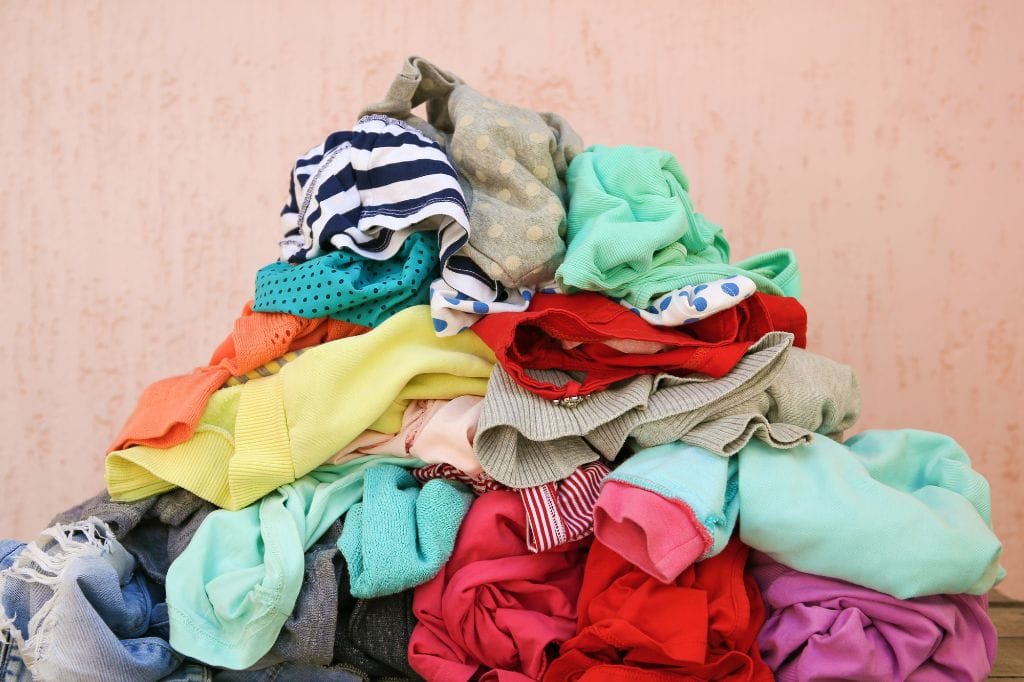
Every year, the UK sends roughly 300,000 tonnes of clothing to landfill or incineration. But what does that waste actually represent in terms of our planet’s resources?
The fashion industry is incredibly resource-intensive. Growing cotton requires huge amounts of freshwater, while the manufacturing, dyeing, and shipping of everyday clothing generate significant carbon emissions. By extending the life of your clothes through local donation and recycling, you help reduce the demand for new items to be made.
Use our free calculator below to measure the environmental impact of your clothes. Enter the items you plan to donate, pass on or give a second life to, and discover how much water and CO₂ can be saved when clothing stays in use for longer.
Calculate Your Impact
Enter the number of items you are planning to donate to see your resource savings.
Your Estimated Environmental Savings
0
Litres of Water Saved
Drinking water for 1 person for 0 days0
kg of CO₂ Prevented
Equivalent to driving about 0 miles in a carReady to turn these savings into reality?
If you live in Hertfordshire, we will come and collect these items directly from your doorstep—for free. We ensure your items are reused or responsibly recycled within the UK circular economy.
Book Your Free CollectionHow Do We Calculate Your Wardrobe’s Footprint?
We believe in transparency. The figures in our calculator aren’t guessed; they are based on established environmental research regarding the UK textile industry. We rely on data from organisations such as Oxfam, WRI.org and the Sustainability Magazine.
| Clothing Item | Water Footprint | Carbon Footprint (kg CO₂e) |
|---|---|---|
| 1x Cotton T-Shirt | 2,700 L | 5.0 kg |
| 1x Pair of Jeans | 8,000 L | 15.0 kg |
| 1x Heavy Jumper | 3,350 L | 10.0 kg |
| 1x Winter Coat | 5,000 L | 20.0 kg |
| 1x Pair of Shoes | 4,000 L | 14.0 kg |
The Water Footprint: Cotton is a notoriously thirsty crop. According to Oxfam, it takes about 2,500 litres of water to yield enough cotton for a single t-shirt. To put that into perspective, the NHS recommends drinking about 2 to 3 litres of water a day. That single t-shirt uses enough water to sustain one human for over three years.
The Carbon Emissions: The CO₂ figures represent the “embodied carbon” of the garment. This includes the fuel used in agricultural machinery, the energy-intensive weaving and dyeing processes, and the international shipping required to bring the item to the UK high street.
Why Textile Reuse in Hertfordshire Matters
When clothes are thrown into standard household bins, they end up in local landfill sites. As natural fibres like cotton and wool decompose in these oxygen-starved environments, they release methane—a greenhouse gas significantly more potent than carbon dioxide. Synthetic fibres, like polyester, simply sit there for centuries, slowly releasing microplastics.
At Donate to Reduce, we provide a local solution to a global problem. Our free clothes collection service across Hertfordshire makes it easy to give unwanted clothing a second life. There’s no need to transport bags of clothes yourself or find somewhere to drop them off. We collect directly from your doorstep, helping keep wearable items in use for longer and reducing the environmental impact associated with producing new clothing.
Frequently Asked Questions
Are the savings in the calculator 100% exact?
No — the calculator provides a highly informed estimate based on industry averages. Different garments have different footprints; for example, a heavy waterproof coat made from synthetic materials will differ significantly from a lightweight linen shirt. The tool is designed to show the scale of natural resources required to produce clothing.
Do I get environmental benefits if my clothes are damaged?
Not necessarily. To be reused, clothing must be clean, dry, and in wearable condition. Items that are ripped, heavily stained, or wet cannot be passed on, as they may damage other items in the same collection.
Please only give items that meet our items we accept guidelines.
Where do my donated clothes go?
We focus on keeping clothing in use locally. Items are passed on through reuse channels such as redistribution, resale, or support for local community organisations and local charity shops.
What condition should my clothes be in?
Clothing should be clean, dry, and wearable. We’re unable to accept items that are heavily damaged, wet, or unsuitable for reuse.